




What are Digital Certificates?
A digital certificate is an electronic credential, issued and signed by a trusted certificate authority (CA), that binds a verified identity (a person, server, device, or organization) to a public key.
A digital certificate proves that a public key really belongs to the identity named in it. A certificate authority verifies the identity, signs the certificate with its own key, and devices then trust it through a chain that leads back to a trusted root. Most digital certificates follow the X.509 standard and make TLS/HTTPS, code signing, secure email, and device authentication possible.
Key Takeaways
- A digital certificate binds a verified identity to a public key and is digitally signed by a trusted certificate authority.
- Most digital certificates follow the X.509 v3 format and are trusted through a chain back to a root CA.
- Common types include TLS/SSL, code signing, S/MIME (email), and client or device certificates.
- Validation levels (DV, OV, and EV) differ in how much identity the CA verifies before issuing.
- Public TLS certificate lifetimes are shrinking on the CA/Browser Forum schedule toward 47 days by 2029, so automated management is now essential.
What is a Digital Certificate?
A digital certificate is the cryptographic equivalent of a passport. It contains a public key and identifying information, and it carries the digital signature of the certificate authority that issued it. Because relying parties already trust that CA, they can trust the identity in the certificate without contacting the owner directly.
Digital certificates are a core building block of public key infrastructure (PKI), the set of policies, technology, and authorities that issue and manage them. Without certificates, a public key is just a number with no proof of who controls it.
How Digital Certificates Work
A digital certificate works through a request, verification, and trust process:
- Key generation. The certificate owner generates a key pair: a private key kept secret and a public key meant to be shared.
- Certificate signing request. The owner creates a certificate signing request (CSR) containing the public key and identity details, then sends it to a CA.
- Validation. The CA verifies the request to a defined level (domain, organization, or extended validation).
- Issuance. The CA signs the certificate with its private key and issues it to the owner.
- Trust and use. A relying party (such as a browser) checks the signature, follows the chain to a trusted root, confirms the certificate is valid and not revoked, then uses the public key.
You can create a request yourself with our free CSR Generator, and inspect any certificate with the ASN.1 decoder.
What is Inside an X.509 Certificate?
Most digital certificates use the X.509 v3 format defined by the ITU-T and profiled for the internet in IETF RFC 5280. The main fields are below.
| Field | What it Holds |
|---|---|
| Subject | The identity the certificate represents (for example, a domain name or organization). |
| Issuer | The certificate authority that signed and issued the certificate. |
| Public key | The subject’s public key and its algorithm (for example, RSA or ECDSA). |
| Validity period | The not-before and not-after dates that bound the certificate’s life. |
| Serial number | A unique identifier assigned by the issuing CA. |
| Extensions | Usage constraints such as key usage, extended key usage, and subject alternative names (SANs). |
| Signature | The CA’s digital signature over all of the above. |
Types of Digital Certificates
| Type | Purpose | Maps to |
|---|---|---|
| TLS/SSL certificate | Authenticates a website and encrypts HTTPS traffic. | SSL/TLS certificates |
| Code signing certificate | Proves software comes from a known publisher and has not been altered. | CodeSign Secure |
| S/MIME (email) certificate | Signs and encrypts email to prove sender identity and protect contents. | Secure email |
| Client / device certificate | Authenticates a user or device to a network or service (mutual TLS). | Device identity |
| Document signing certificate | Applies a legally recognized digital signature to documents. | Digital signing |
Validation levels: DV, OV, and EV
For TLS certificates, the validation level reflects how much identity the CA checks before issuing. All three deliver the same encryption strength; they differ in the identity assurance behind the certificate.
| Level | What the CA Verifies | Typical Use |
|---|---|---|
| Domain Validation (DV) | Control of the domain only. Issued in minutes. | Blogs, small sites, internal services. |
| Organization Validation (OV) | Domain control plus the existence of the organization. | Business and corporate sites. |
| Extended Validation (EV) | A rigorous check of the legal organization and its authorization. | Banks, payment, and high-assurance contexts. |
Note that EV certificates no longer show a company name in the browser address bar. Chrome and Firefox removed that indicator in 2019, so all certificates now display a neutral padlock and the EV identity is visible only when a user clicks the lock. See what an EV certificate is for detail.
Why Certificate Lifetimes are Shrinking
Public TLS certificates are getting shorter lives. Under CA/Browser Forum ballot SC-081v3, passed in April 2025, the maximum validity drops on a fixed schedule. Confirm current dates against the CA/Browser Forum.
| Effective Date | Maximum TLS Validity | Max Domain Validation Reuse |
|---|---|---|
| Through March 14, 2026 | 398 days | 398 days |
| March 15, 2026 | 200 days (current) | 200 days |
| March 15, 2027 | 100 days | 100 days |
| March 15, 2029 | 47 days | 10 days |
Shorter lifetimes mean far more frequent renewals. A certificate you used to replace once a year will need replacing several times a year by 2029, which is the main reason organizations move from spreadsheets to automated certificate management.
How to Manage Digital Certificates at Scale
A handful of certificates can be tracked by hand. Hundreds or thousands cannot. The core practices are to keep a complete inventory of every certificate, monitor expiry dates, automate renewal and deployment, and revoke promptly when a key is compromised.
These tasks are the job of certificate lifecycle management. For background on the trust model behind every certificate, see the certificate chain of trust and what a certificate authority is.
How Encryption Consulting Helps
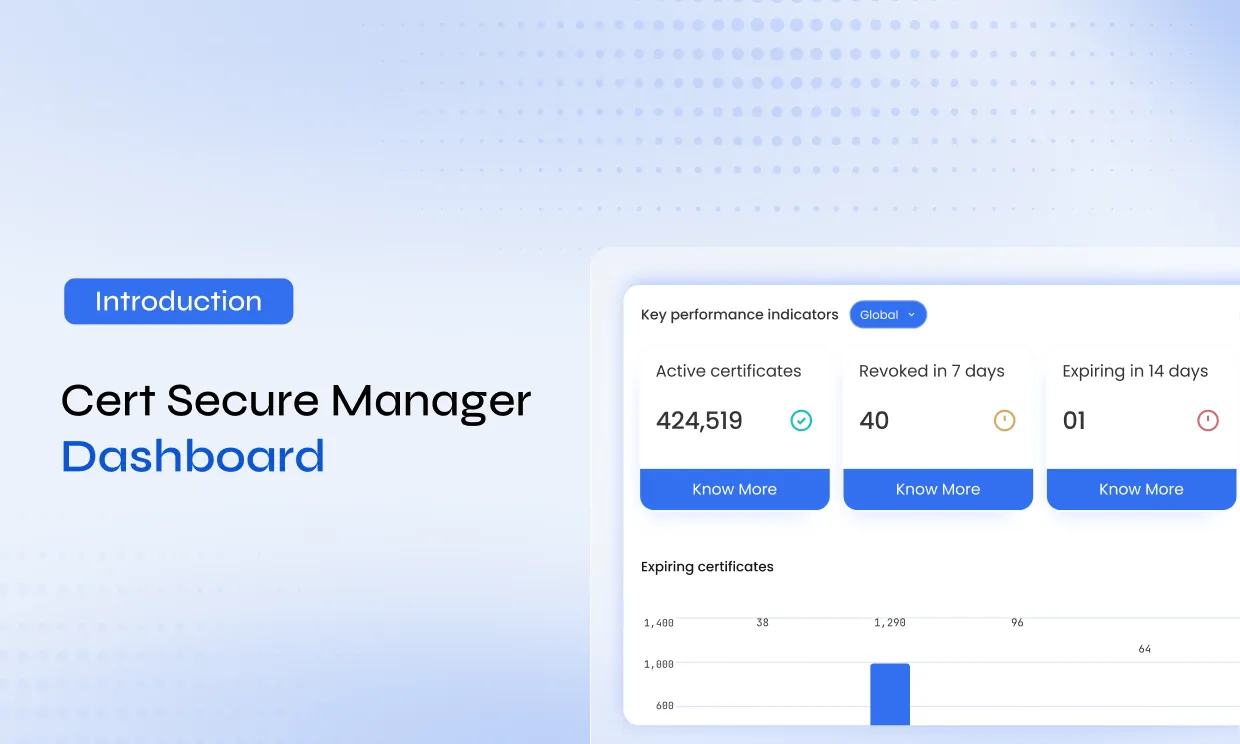
CertSecure Manager discovers every digital certificate across your environment, tracks expiry, and automates issuance, renewal, and revocation so shorter lifetimes never cause an outage. It works with public and private CAs and is backed by Encryption Consulting’s ISO/IEC 27001:2022 and SOC 2 certified practices.
Frequently Asked Questions
A digital signature is the cryptographic operation that proves a message or file came from a specific private key and was not altered. A digital certificate is the credential that proves which identity owns that key. The certificate provides the trusted identity; the signature provides proof of origin and integrity. They work together but are not the same thing.
An SSL/TLS certificate is one type of digital certificate, used specifically to authenticate websites and encrypt HTTPS traffic. Digital certificate is the broad category that also includes code signing, email (S/MIME), document signing, and client or device certificates. Every SSL certificate is a digital certificate, but not every digital certificate is an SSL certificate.
Public certificates are issued by certificate authorities such as DigiCert, Sectigo, Let’s Encrypt, and GlobalSign, which are trusted by browsers and operating systems. Organizations can also run a private CA to issue certificates for internal users and devices. In both cases the CA verifies the identity and signs the certificate so others can trust it.
It depends on the type. As of March 2026, public TLS certificates have a maximum validity of 200 days, dropping to 100 days in 2027 and 47 days in 2029 under the CA/Browser Forum schedule. Other types, such as code signing and private device certificates, can have longer lifetimes set by the issuing policy.
An expired certificate is no longer trusted. For a website, browsers show a security warning and visitors are blocked, which causes an outage. For other systems, expired certificates can break authentication, signing, or encrypted connections. Because outages from expiry are common and avoidable, monitoring and automated renewal are the heart of certificate management.
Take Control of Your Certificates
Ready to see every certificate you own and never miss a renewal? See CertSecure Manager in action, or try our free CSR Generator.

Every Layer of Cryptography.
One Team to Secure It.
See how Encryption Consulting secures what your enterprise depends on, from assessment through deployment.
Request a Demo